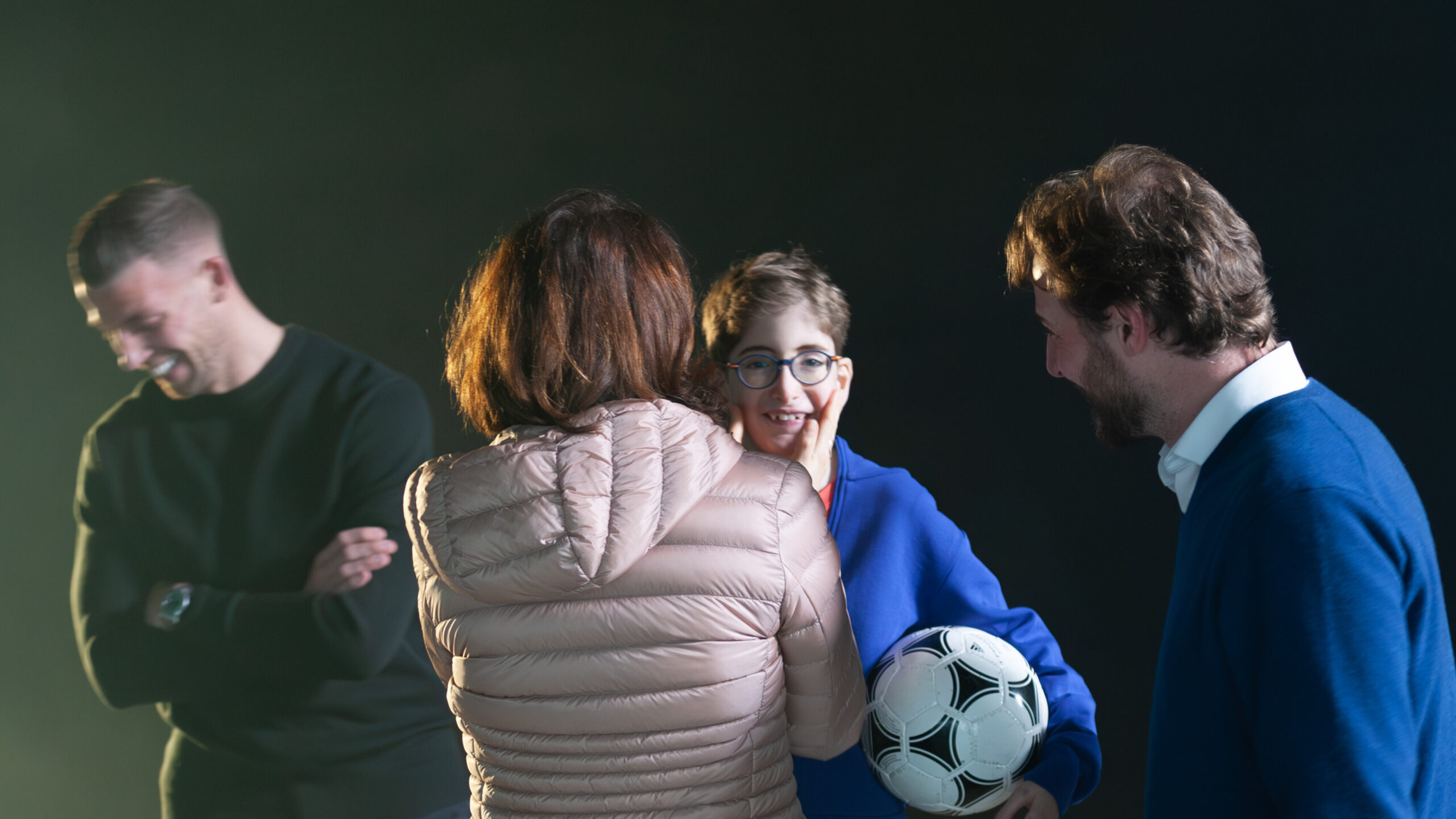
Right from the start of his testimony, Aurélien’s father, Romain Alderweireldt, sets the tone: “Tears are never far when I talk about this. So I often take refuge in science. Because it offers perspective. Because it gives hope.”
Aurélien will soon turn 10. He has a rare and severe neonatal form of Marfan syndrome. “At birth, doctors gave us a life expectancy of 16 months. Today, he plays football. He rides a bike. He laughs, he lives, he lifts everyone around him. That’s a victory. His victory. But also that of his mother, Ludivine, who has fought body and soul for him since day one.”
Aurélien carries us with him
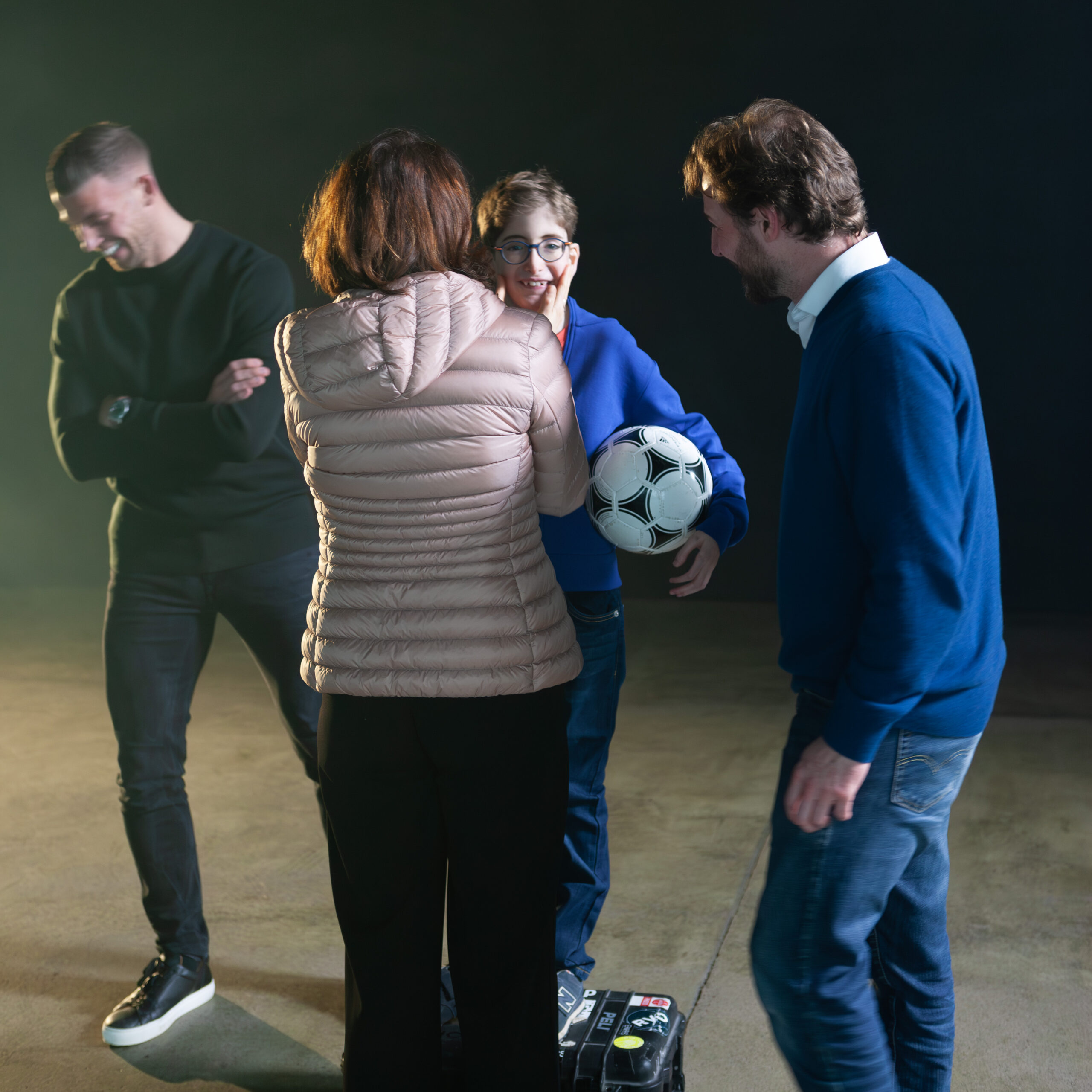
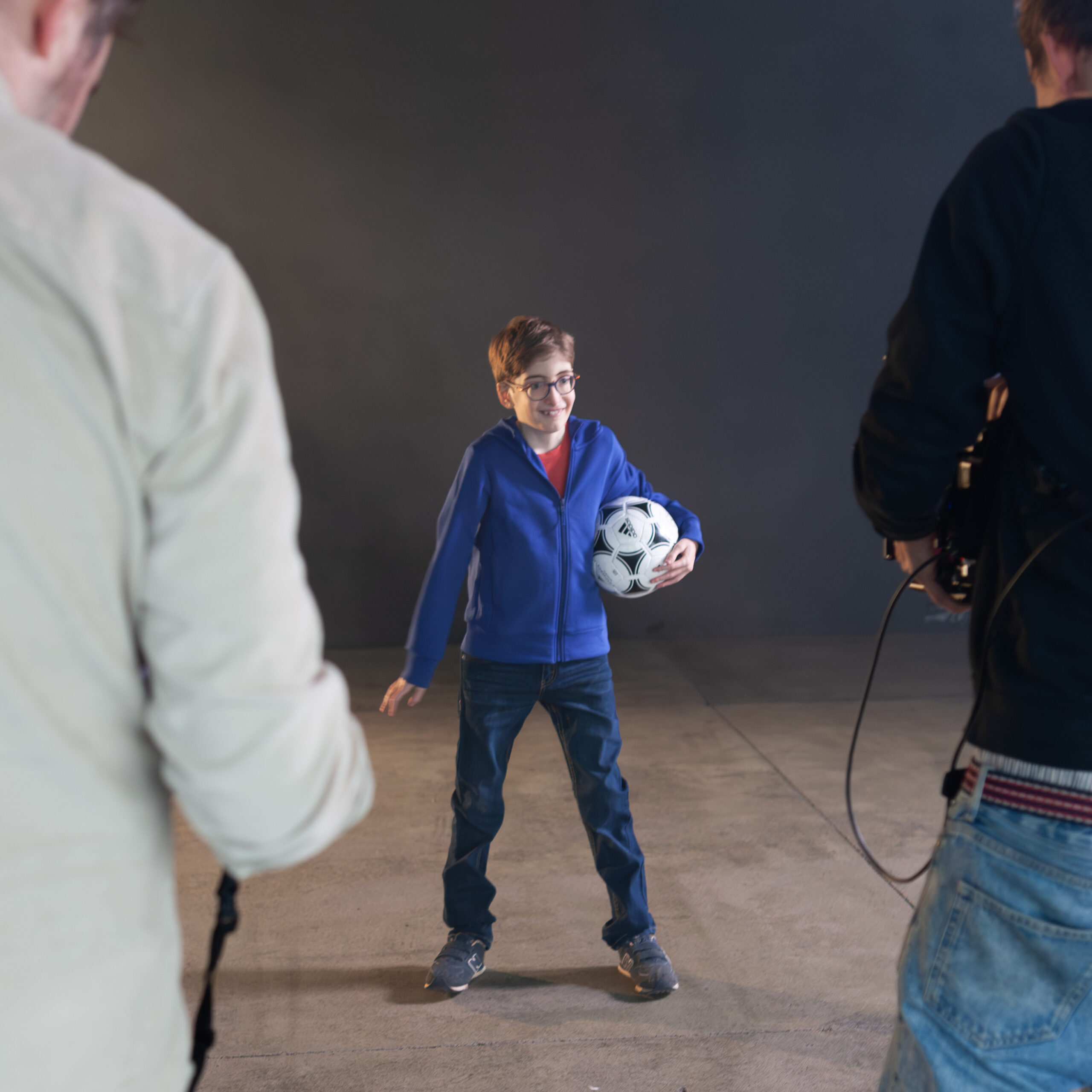
Marfan syndrome affects about 1 in 2,000 births, and every case is different — but Aurélien faces a heavy combination of symptoms: major orthopedic issues, severe skeletal tissue damage, serious eye complications, fragile lungs, multiple surgeries, frequent hospital stays…”He’s known what a catheter is from a very young age and could probably write a guide to all the hospitals in Belgium!” his father says with humor. The most terrifying aspect, however, is the cardiac dimension of the disease. He has checkups every three months. “We live with constant worry, but also with incredible intensity. And beside all that, he is very bright, very sociable, has many friends, and — we hope — is truly happy. When he was diagnosed, we were told he’d never play rugby. We didn’t really care at the time. We understood later. And despite everything, Aurélien can walk today. When he sees a ball, he runs after it with his leg braces, like in that photo where he’s playing with Toby Alderweireld during a wonderful event by the UZA Foundation. He even rides a bike!” He lives. He laughs. He runs, in his own way. He perseveres. He was never supposed to play sports — yet today, he plays futsal and mini-basketball. His PE teacher encourages him every day. He has an amazing physiotherapist who motivates him, a loyal group of friends, and a self-confidence that is truly admirable.
Aurélien’s message to other children living with a genetic disease?
“You can always take action.” “And that’s what I hold onto today,” says his father. “Yes, the diagnosis of a rare disease is a shock. Yes, it’s a daily battle. But there are also beautiful moments. And that’s not just a way of speaking. It’s real. It’s intense. It’s precious. Aurélien has two older sisters. When he was born, if happiness had a world championship, I think we would have won it! Our life is different now. More complex. But we’re still truly happy. Just differently.”
An exponential societal impact
Romain continues: “My dream every morning? To find a treatment for Aurélien. To find a therapy. And to get there, there’s no single path. We have to move forward on several fronts: genomics, like we do with our foundation 101Genomes, but also basic genetic research, like GENeHOPE does, and clinical research too. Research into rare diseases is like rebuilding a ruined house: we have to tackle it from all sides at once. Because rare diseases don’t just affect those diagnosed. They raise questions for all of us — about our humanity. About our collective ability to understand, to care, to support. A rare disease also deeply affects parents, siblings, schools, professional lives… Its societal impact is exponential — far beyond statistics.”
And Romain concludes: “To care about rare diseases is to care about human genetics. It’s a way to grow as human beings and to contribute to better medicine for all. By caring for the most fragile, we also heal our society. A genetic fragility can become a strength. A strength to push research forward. To move medicine forward. To move humanity forward.”
Aurélien in action