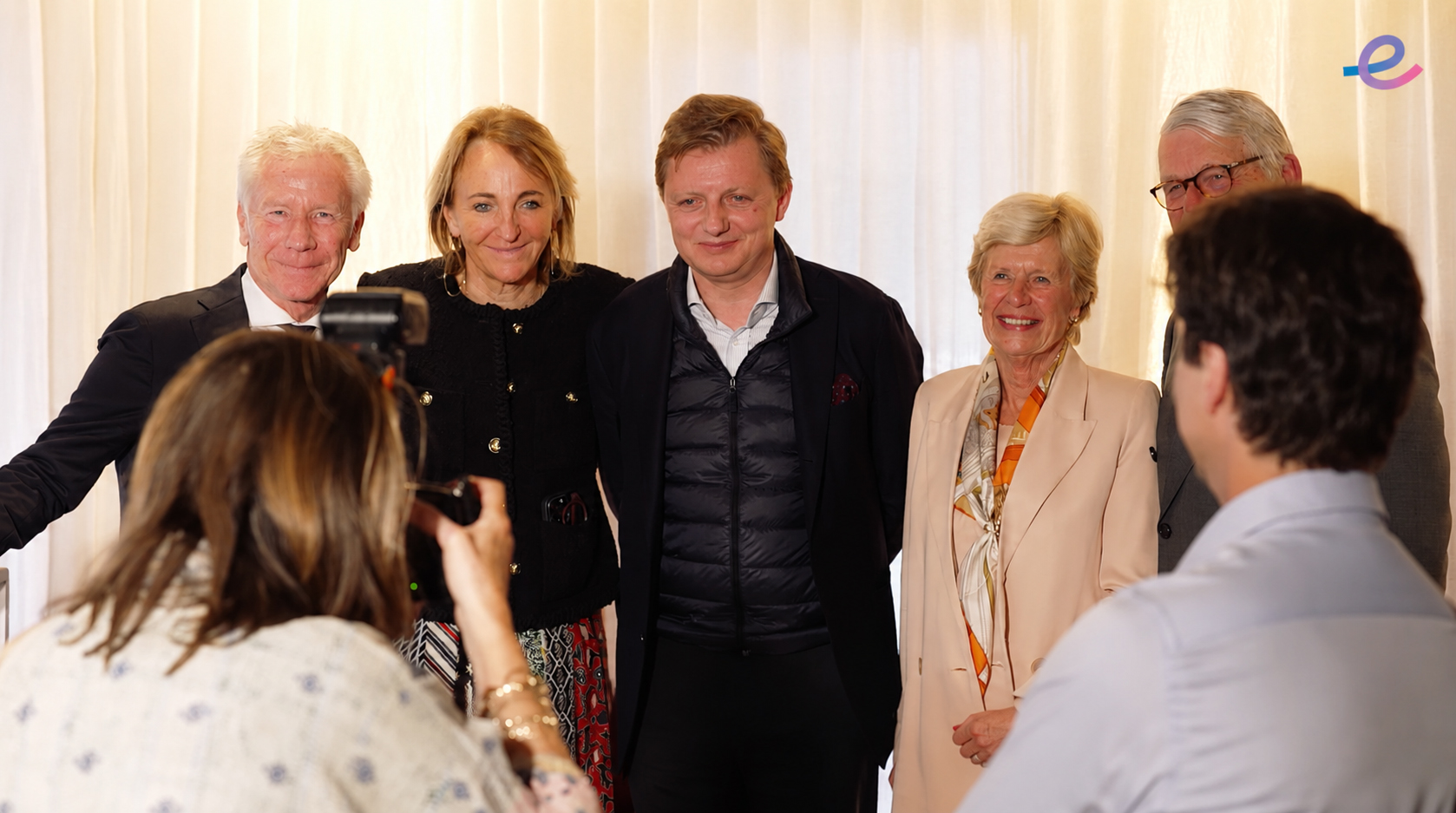
For the second consecutive year, GENeHOPE held its annual research grant award ceremony on June 15. Beyond the allocation of funding, the event once again reflected the very essence of the Fund: bringing together scientific research, philanthropic commitment, and the lived experiences of families affected by genetic disorders.
A rigorous selection process following an international call for projects
Following a call for research proposals launched through the King Baudouin Foundation, GENeHOPE received six outstanding applications submitted by French-speaking and Dutch-speaking Belgian research teams, as well as several French investigators from reference centres. The diversity of the projects confirmed the dynamism of the medical genetics field, both in terms of the diseases being studied and the methodological approaches proposed.
Two projects aiming to better understand genetic disorders
After a thorough evaluation process, GENeHOPE’s Scientific Committee selected two particularly innovative research projects, combining academic excellence with strong translational potential.
- Project 1 – Myhre syndrome: unravelling the mechanisms of fibrosis
The first project focuses on Myhre syndrome, a rare genetic disorder notably characterized by progressive fibrosis affecting the skin and skeletal system. Researchers Bert Callewaert (Ghent University Hospital) and Valérie Cormier-Daire (Institut Imagine) aim to understand how mutations in the SMAD4 gene disrupt the cellular and molecular mechanisms responsible for this abnormal tissue stiffening. By combining zebrafish and mouse models, they will investigate the biological pathways involved in order to identify potential targeted therapeutic strategies for the future. - Project 2 – Duchenne muscular dystrophy: understanding the brain dimensions of the disease
The second project, led by Nicolas Deconinck (ULB) and Vincent Cantagrel (Institut Imagine), explores a dimension of Duchenne muscular dystrophy that remains insufficiently understood: its impact on the brain. Beyond muscle degeneration, many patients experience cognitive, emotional, and social difficulties, the underlying mechanisms of which are still poorly understood. The project is based on the hypothesis that the absence of specific forms of dystrophin in the brain may disrupt neuronal circuits involved in these functions. Through an integrated approach combining molecular analyses, neuronal circuit studies, and behavioural assessments in mouse models, the researchers hope to gain a better understanding of these mechanisms and identify potential biomarkers for future therapeutic strategies.
An evening rich in dialogue and encounters
Held in the intimate setting of Villalobar in Brussels, within Belfius’ premises, the ceremony brought together researchers, clinicians, members of the Scientific and Management Committees, partners, donors, and several families affected by genetic disorders. The project presentations sparked many meaningful discussions, highlighting the importance of dialogue between science and society at the heart of GENeHOPE’s mission. These exchanges helped make often complex research projects more tangible while underscoring their concrete and lasting contribution to improving patient care and support.
Each selected project will receive funding to support the work of the research teams and strengthen international collaborations, some of which are already established.
On behalf of its three Committees, GENeHOPE extends its sincere gratitude to all researchers who responded to the call for projects, as well as to the King Baudouin Foundation for its essential role in structuring and supporting the Fund. We also warmly thank all sponsors and donors who attended the event and, more broadly, everyone who supports our mission. Without their commitment, these scientific advances (and the hope they bring to families!) would not be possible.