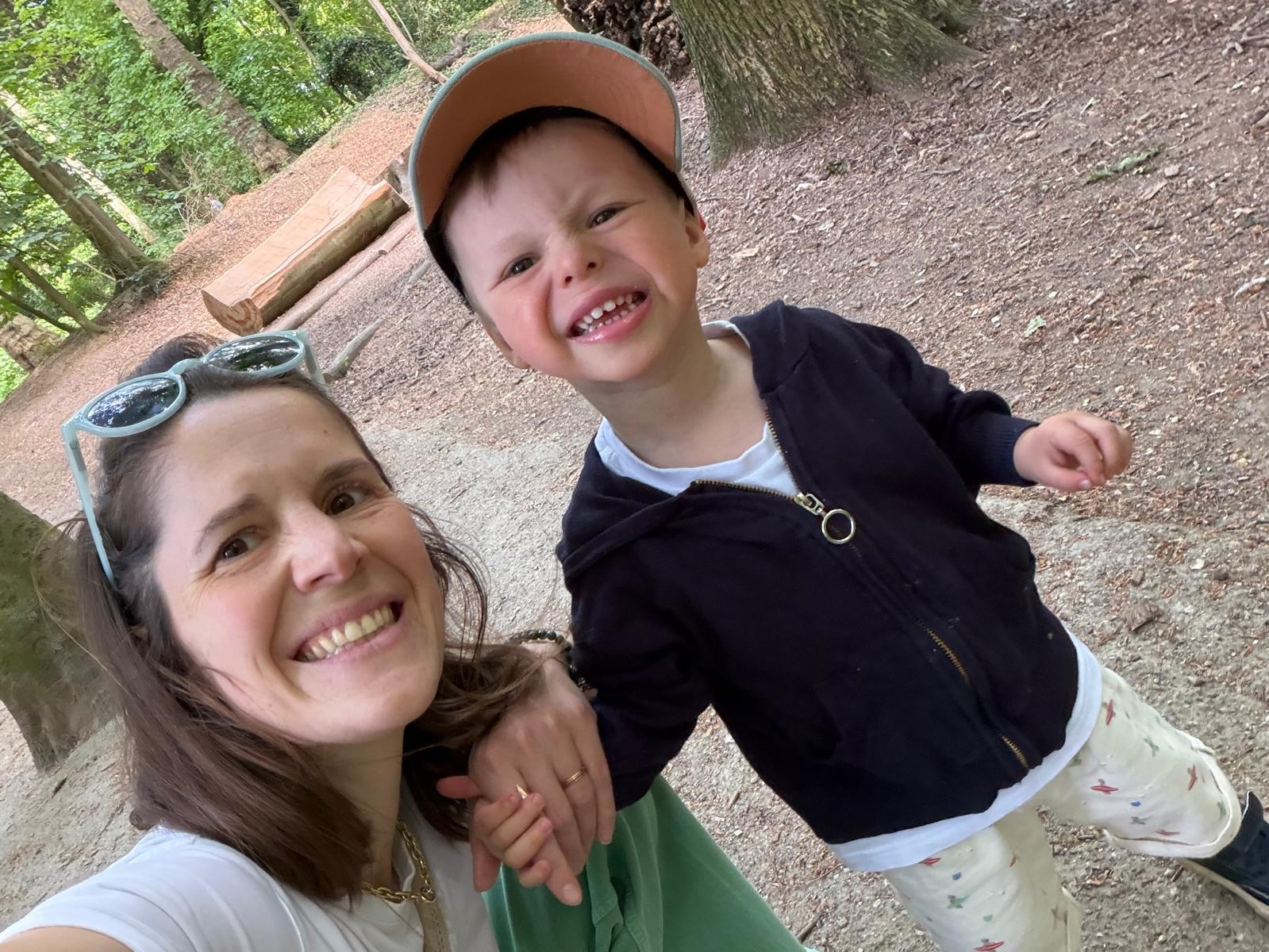
When Sybille Lancksweert talks about the birth of her second son, Victor, the emotion is still as strong as ever. “I hope that I will cry all my life when I tell this story… Because in fact, that is also our strength. Crying simply means the path has been difficult, and sometimes still is. And that’s OK.”
The story actually begins several months before Victor’s birth. From the fourth month of pregnancy, Sybille’s gynaecologist, Dr Hutchings, notices that the baby is small. Nothing alarming, but enough to call for closer monitoring. “It may not mean anything, but I prefer to keep a closer eye on it.” He therefore decides to schedule more frequent detailed ultrasound scans. A precaution that, in hindsight, would prove crucial.
At 37 weeks of pregnancy, an ultrasound reveals a significant heart abnormality. Within hours, everything accelerates. Sybille is transferred to the Universitary Hospitals Saint-Luc for further examinations. It is there that she will give birth, to ensure her baby receives the best possible medical follow-up from his very first moments of life.
At birth, Victor is immediately taken care of, and tests follow one after another, including genetic analyses. The initial results show nothing particular. Yet the doctors take the time to explain the situation with great humanity, as they understand it. “There is something. We just don’t yet know what. It may not be serious… or it may be more complex. But there is something.”
Then begins a long and exhausting period of waiting, between hope and the fear of the unknown. A few days later, the diagnosis comes: Victor has Williams syndrome.
For Sybille, time seems to stop. In the middle of her postpartum period, still weakened by childbirth and suddenly confronted with a new reality, she goes through these days in a suspended state. One question from that time remains deeply engraved in her memory. “Someone asked me if I had done anything differently during my pregnancy…”
Today she understands that this question was part of the medical process. But at the time, it hits her like a shockwave. “I immediately wondered if it was my fault. It was so brutal…” And then there was another sentence, spoken almost in the same breath, just after the diagnosis: “And above all… don’t go on the internet.”
When an early diagnosis changes the course of a life
With hindsight, Sybille understands how complex that moment was. The diagnosis was brutal, but also precious.
Today, she is convinced that this early diagnosis (made possible thanks to the vigilance of medical teams even before Victor’s birth) has profoundly changed his trajectory. It allowed care, stimulation, and therapeutic support to be put in place very early. “In a child’s development, every month matters. And today, every small step forward Victor makes is a victory.”
Acting early makes all the difference. In the hours following the diagnosis, while everything still feels uncertain, a friend says something she will never forget: “I saw an episode of Grey’s Anatomy about this condition… relax, it’s not that serious. Your child will be very happy!” Sybille still smiles when she recalls it.
Of course, it was not a scientific truth. But in that exact moment, those words brought her immense relief. For the first time, someone was speaking about her son’s future, not only about his condition. Today, when she explains Victor’s situation to other children, Sybille simply says: “Victor is not really sick. He doesn’t need medication. He just has more specific needs.”
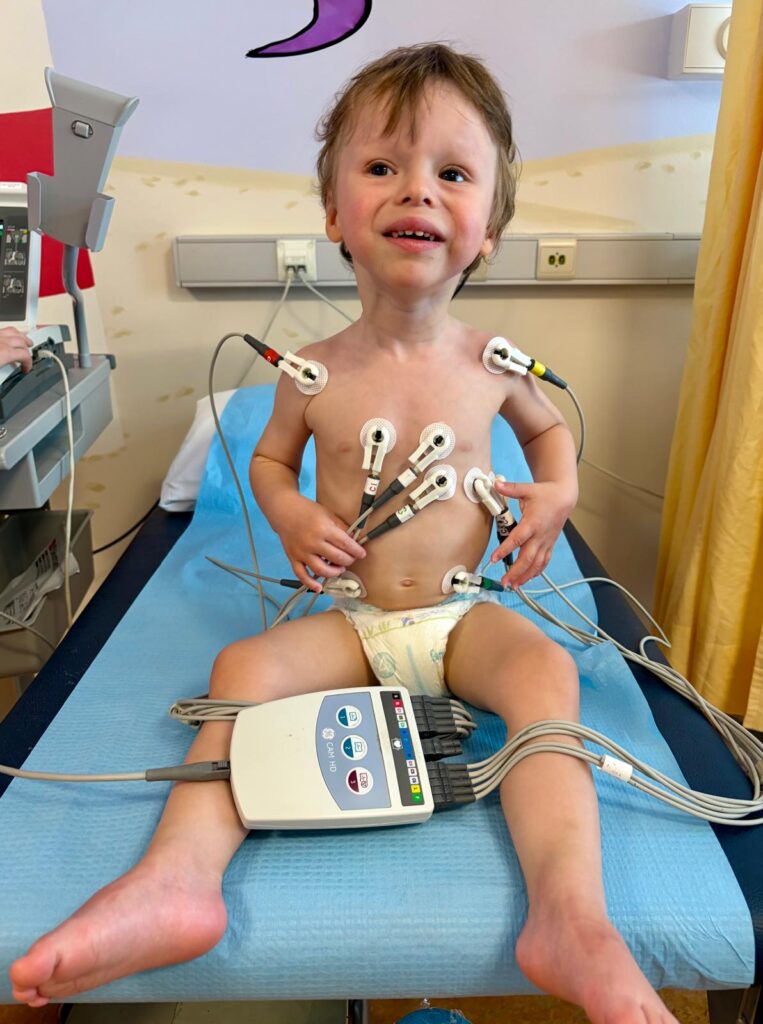
Today, Victor is about to celebrate his third birthday. He is growing at his own pace, supported by the valuable care of Professor Sznajer at the Universitary Hospitals Saint-Luc (also a member of the GENeHOPE Scientific Committee). He is followed through a multidisciplinary care programme, including specialised consultation days at Saint-Luc, where several specialists coordinate his care, particularly regarding his hypercalcaemia and certain metabolic particularities.
Victor is a very sociable little boy (“sometimes too sociable” Sybille smiles), with a strong sensitivity to sound and touch, and an exceptionally fine hearing. He is also followed in physiotherapy by Anne Vandervliet in Braine-l’Alleud, whose attentive and caring support plays a key role in his daily progress.
Behind this medical and therapeutic follow-up lies once again that busy family life. Between appointments, rehabilitation sessions, administrative tasks, filling out support applications, and all the small and big decisions of daily life, each week requires constant organisation and endless energy. Sybille continues her work in the events sector while trying to maintain balance within her family. An intense rhythm, often invisible to the outside world. “No one really knows what we go through.” But Sybille is never alone. Her husband, Charles Eeckhout, is her most important support. “He makes it possible for me to take all the steps needed for Victor. While I handle appointments, paperwork, and everything that comes with it, Charles keeps our family balanced. He is incredibly steady. He gives me the strength and energy to keep going. Without his constant support, I simply would not be able to do everything I do for Victor.”
Alongside them, their families (parents, brothers and sisters) are also an essential support. Present, available, and always willing to help, they support them in both the simplest everyday moments and the most difficult times. “I am extremely lucky to be so well surrounded. Of course, there are sometimes small awkward moments, because it is not always easy to know what to say or do. But they are there. And that presence means so much. You don’t go through a journey like this alone.”
Over time, she has also found another essential source of support: other mothers facing similar realities. “It really helps to have a small WhatsApp group where you can share everything. You can ask any question, share a worry or a victory. We understand each other immediately.” As Hélène also shares in her testimony, these connections between families often become a real breath of fresh air, a space where things can be said without needing explanation.
Victor’s story is a reminder of an essential truth: in genetic conditions, time is precious. The time to diagnosis. The time of care and follow-up. The time of early learning and development.
Every week, every month gained can have a lasting impact on a child’s development. “We may not be able to change the diagnosis, but we can change everything that comes after.”
And this is also why Sybille agreed to share her testimony with GENeHOPE. Because supporting research means allowing more children to be diagnosed earlier, to receive care more quickly, and tomorrow to benefit from new therapeutic advances. For better future prospects for children like Victor and their families.