
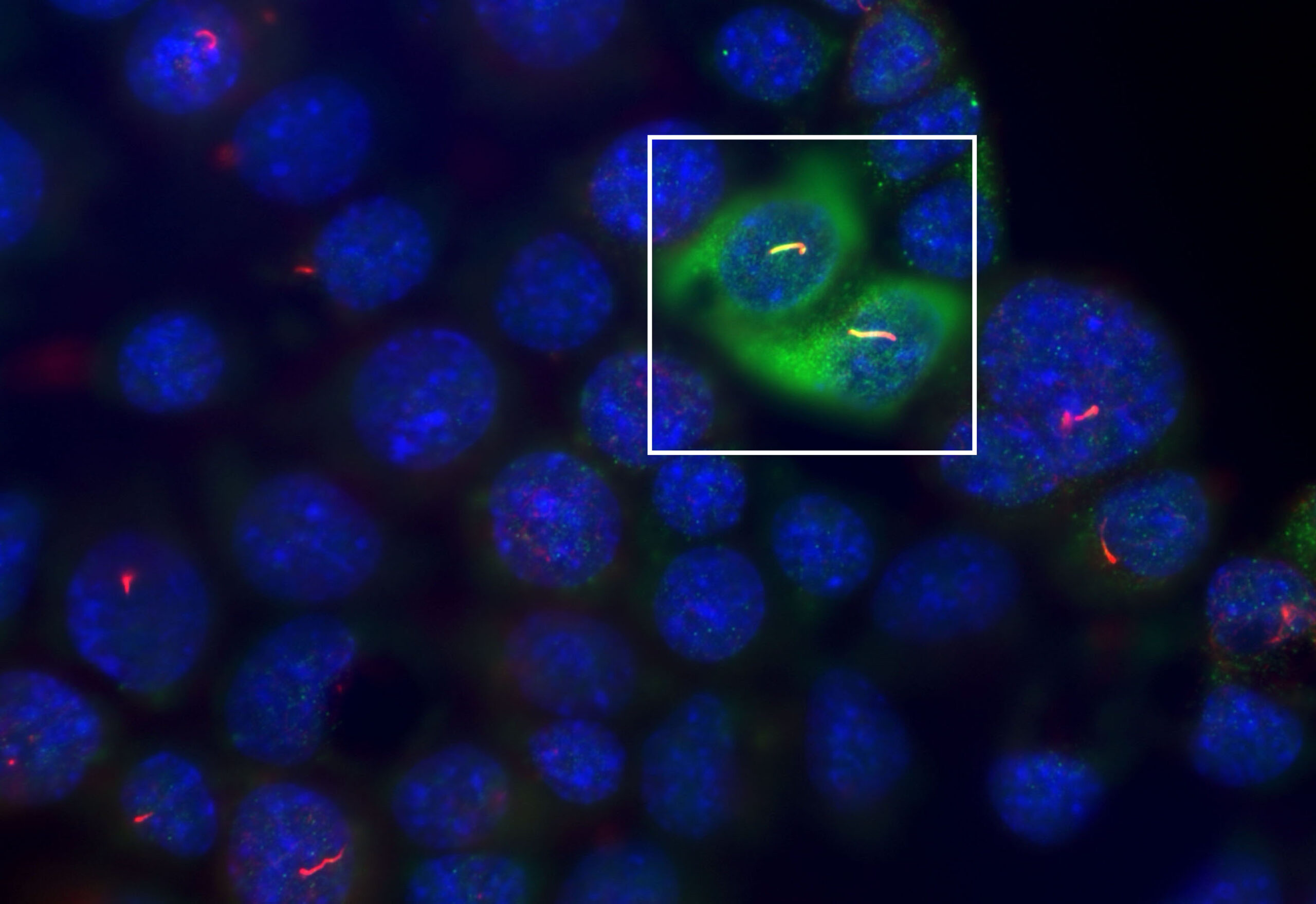

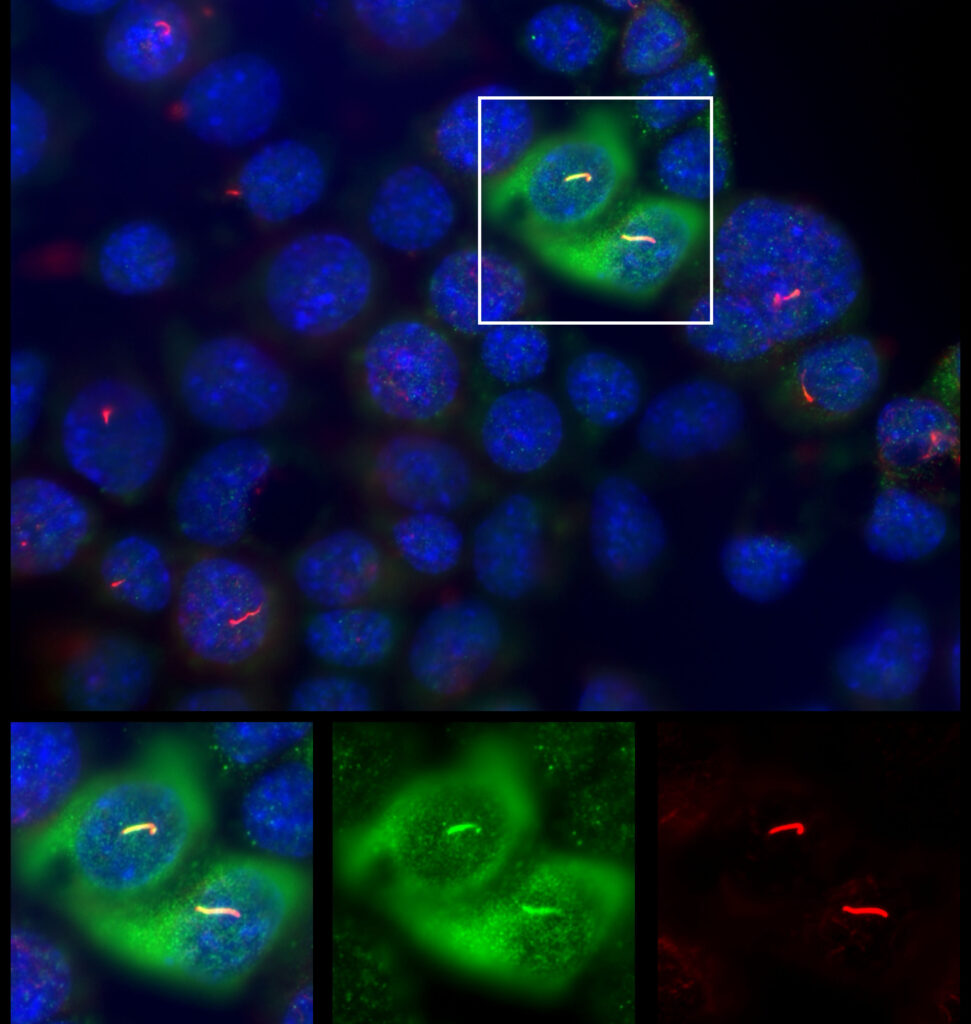
Ciliopathies are rare genetic diseases caused by abnormalities in primary cilia – tiny cellular structures that play an essential role in communication between cells and in organ development. Until now, these diseases had mainly been associated with disorders affecting the kidneys, liver or eyes.
However, a recent study led by Patrick Jacquemin (researcher at the de Duve Institute, UCLouvain) and Isabelle Scheers (paediatric gastroenterologist at Cliniques universitaires Saint-Luc and researcher at the de Duve Institute) reveals a new dimension to these conditions: a specific form of pancreatic disease, which the researchers have named ciliogenic pancreatopathy.
Published in the journal Gut on 18 August 2026, this discovery was made possible thanks to the support of the GENeHOPE Fund and close collaboration with a team from the Imagine Institute in Paris.
Adipopancreatosis: when the pancreas is gradually replaced by fat
Adipopancreatosis: when the pancreas is gradually replaced by fat
The study identified a previously unknown mechanism: in some patients with ciliopathies, the exocrine pancreas – responsible for producing digestive enzymes – undergoes progressive degeneration.
Pancreatic acinar cells gradually disappear and are replaced by fatty tissue, a process the researchers have named adipopancreatosis.
To better understand this phenomenon, the team:
- Studied a cohort of nearly 350 patients presenting with pancreatic abnormalities from childhood.
- Identified mutations in the HNF1B and NPHP3 genes in some of these patients.
- Developed mouse models carrying mutations similar to those identified in patients. In these mice, researchers observed progressive pancreatic atrophy and fat accumulation, confirming the mechanism of adipopancreatosis.
A non-invasive imaging technique (Dixon MRI) was then used to measure the amount of fat in the pancreas of patients carrying HNF1B or NPHP3 mutations.
The result? Their pancreases contained significantly more fat than those of healthy individuals, demonstrating that this phenomenon also occurs in humans.
Important clinical implications
This discovery broadens the spectrum of diseases associated with ciliopathies and highlights the importance of early pancreatic screening in patients carrying mutations in genes such as HNF1B or NPHP3. Indeed, exocrine pancreatic insufficiency – a lack of digestive enzymes – can lead to:
- Digestive disorders, including diarrhea and malabsorption.
- Nutritional deficiencies.
- Potential worsening of kidney complications, as increased intestinal absorption of oxalate following diarrhea can damage the kidneys.
Why does this matter?
Until now, the pancreas was not considered a major organ affected by ciliopathies.
This study shows that patient management may need to evolve, with systematic assessment of pancreatic function – particularly when patients experience unexplained digestive symptoms.
International collaboration and crucial funding
This project received financial support from GENeHOPE, a fund dedicated to research into rare genetic diseases.
Collaboration with the laboratories of Sophie Saunier and Amandine Viau at the Imagine Institute in Paris, which specialize in genetic kidney diseases, was instrumental in bringing together complementary expertise and accelerating these discoveries.
As highlighted in our article published on 15 September 2025, bringing expertise together helps research move forward faster. This synergy made it possible to characterize kidney and pancreatic involvement within the same study, paving the way for the development of future targeted therapies.
What comes next?
The researchers now aim to:
- Assess how frequently this form of pancreatopathy occurs in other ciliopathies.
- Develop accessible screening tools, including biomarkers and imaging techniques.
- Explore therapeutic approaches to prevent or reverse pancreatic damage by targeting primary cilia dysfunction.
In the meantime, this discovery already offers a promising new avenue for improving patients’ quality of life.
Find out more
- Scientific article: Ciliogenic pancreatopathy reveals a link between ciliopathies and exocrine pancreatic disease (Gut, 18 August 2026).