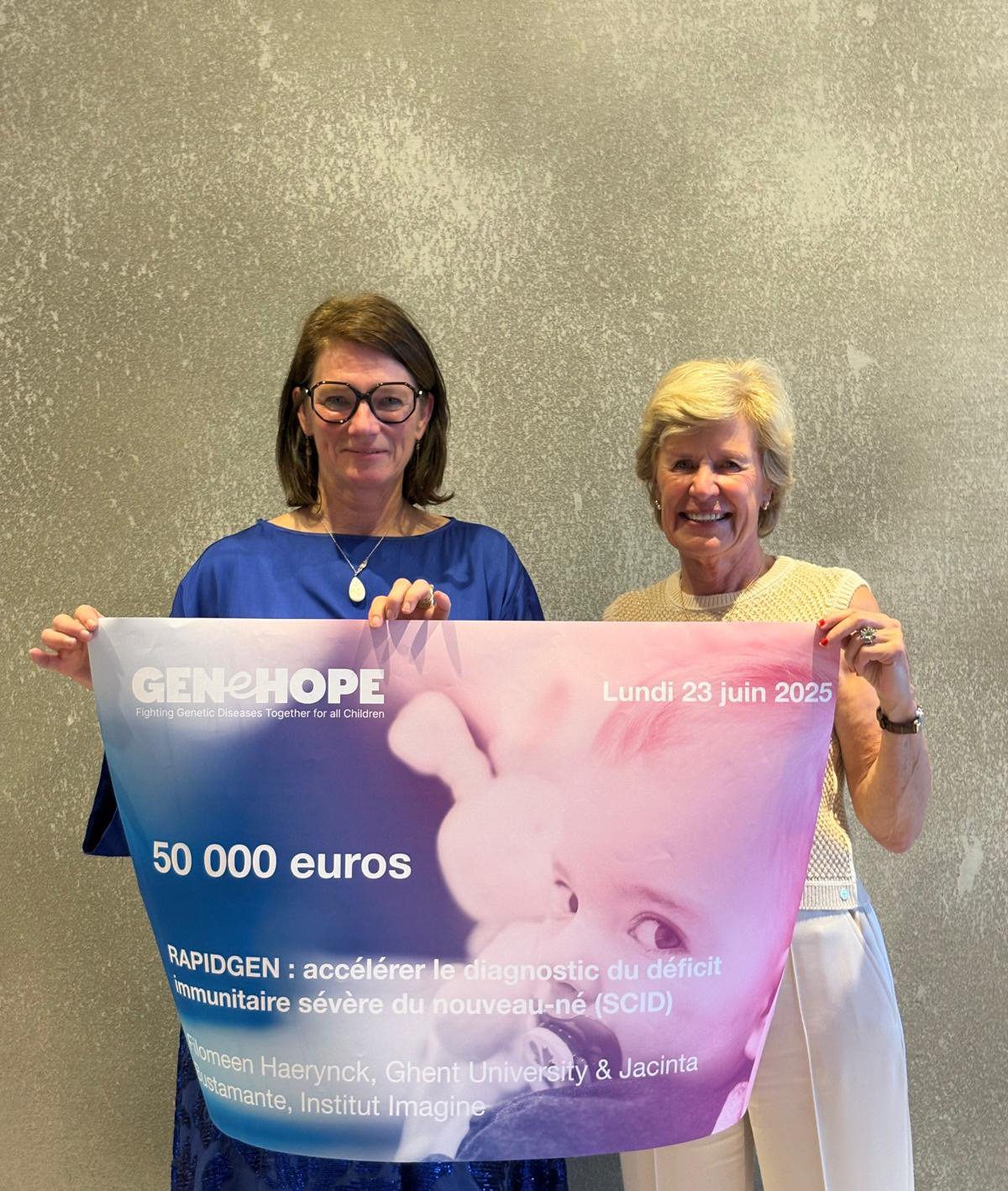
How can we confirm a genetic diagnosis more quickly in a newborn affected by Severe Combined Immunodeficiency (SCID)? This is the question that Prof. Filomeen Haerynck (Ghent University) set out to explore as part of the fourth and final research project funded this year by the GENeHOPE Fund.
SCID is one of the most life-threatening forms of congenital immune disorders. When faced with a newborn presenting with SCID, establishing a rapid and reliable genetic diagnosis is crucial to identify the cause of the disease and initiate life-saving treatment, such as a bone marrow transplant, within the first weeks of life. Every day counts.
That is precisely the goal of the RAPIDGEN project: to develop an ultra-fast platform capable of validating new genes responsible for SCID. This innovative approach aims to accelerate the diagnostic process, enabling children to receive personalized care as early as possible.
In this video, Prof. Filomeen Haerynck (Ghent University) explains how the RAPIDGEN teams are working to turn genetic research into a practical clinical tool :
She also highlights the European collaboration between centers of excellence – notably with Jacinta Bustamante (Institut Imagine, Paris) – combining clinical expertise and fundamental research to better serve patients.
GENeHOPE is all about this: driving scientific breakthroughs that transform lives and bring hope to families directly affected by genetic diseases. If you’d like to support this mission, consider making a donation. Your support can make a real difference.